
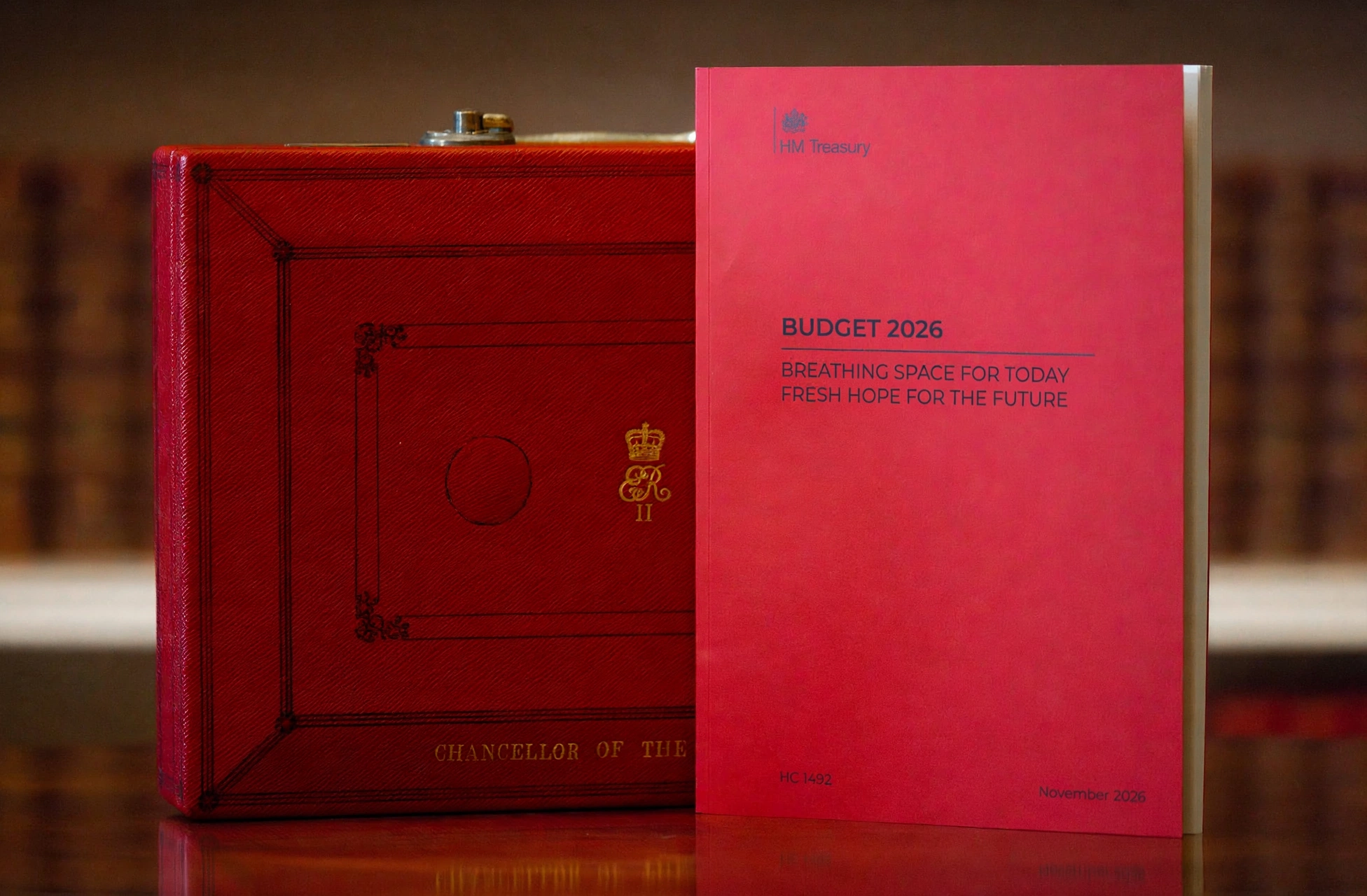
Following the Chancellor of the Exchequer’s presentation of the UK Autumn Budget 2026 on 28 October 2026, the United Kingdom finds itself at a critical economic junction. Amid tightening fiscal constraints and persistent macroeconomic headwinds, the Treasury’s latest fiscal announcement has left international wealth creators, family offices, and cross-border advisors searching for a cohesive, long-term inward investment framework. While HM Treasury introduced incremental adjustments to high-skilled talent and employment visas (Global Investor Visa), the Autumn Budget 2026 explicitly missed the opportunity to establish a dedicated, high-value investor entry route—leaving a projected £225 billion economic opportunity unfulfilled.
Responding directly to the Chancellor’s address, Foreign Investors for Britain (FIFB) warns that superficial administrative tweaks cannot substitute for a genuinely competitive international tax and residency strategy.
“The Chancellor asks where Britain is going. He should also ask where its investors are going—and why competing countries are winning their business,” declared Leslie MacLeod-Miller, Chief Executive Officer of Foreign Investors for Britain. “Talking about British competitiveness does not make Britain competitive. Where is the offer that gives international entrepreneurs a compelling reason to choose Britain over Italy, Greece or the UAE? Hope is not a tax policy. Our tax system needs open-heart surgery. This Budget offers a hair straightener.”
Talent Routes Are Not an Inward Investment Strategy
A detailed examination of the Autumn Budget 2026 documentation reveals several targeted adjustments to the UK’s broader migration and educational pathways. Specifically, the government announced:
- High Potential Individual (HPI) Global Investor Visa Expansion: Extending qualification eligibility to top-tier graduates from the top 150 global institutions, alongside a proportional increase in the annual application cap.
- Graduate Visa Extension: Granting a two-year post-study work runway for international graduates originating from qualifying high-compliance UK universities demonstrating strong labor-market outcomes.
- Global Talent Visa Enhancement: Expanding the endorsed-funder pathway to incorporate over 100 R&D-intensive businesses, supported by UKRI host organization identification through Spring 2027.
- Skilled Worker Safeguards: Updating regional minimum salary thresholds and expanding the visa curtailment grace period up to six months to allow highly skilled individuals to transition between UK employers.
While FIFB welcomes measures that bolster the UK’s talent pipeline, these employment-focused immigration routes fail to address high-net-worth capital mobility.
“These are changes to talent and employment routes. They are not a Global Investor Visa,” emphasized MacLeod-Miller. “Ministers must not confuse a talent policy with an investment strategy. Britain needs talented people. It also needs the capital that backs their ideas, builds their businesses and creates their jobs. Expanding university eligibility and changing employment-visa rules does not answer an entrepreneur’s fundamental question: why should I bring my capital, my business and my family to Britain?”
UK Global Investor Visa (GIV)
The GIV (Global Investor Visa) is explicitly designed to serve a dual purpose: attracting new mobile capital (including US citizens seeking predictable cross-border tax structures) and retaining or inviting back established UK-resident non-domiciled individuals who departed or paused investment due to punitive legacy reforms.
Read our full paper, and join our efforts in persuading Government to think again about their damaging reforms.

The £225 Billion Opportunity: Re-Engineering the Global Investor Visa
The absence of a dedicated investor route comes at a moment when global jurisdictions—including Italy, Greece, Switzerland, and the United Arab Emirates—are actively expanding their residency-by-investment frameworks to capture mobile international wealth. The short-term, 4-year Foreign Income and Gains (FIG) regime introduced in previous fiscal cycles offers insufficient long-term stability for multi-generational wealth deployers.
In contrast, FIFB’s proposed Global Investor Visa (GIV) framework provides a structured, revenue-generating replacement engineered to secure immediate, predictable receipts for HM Revenue & Customs (HMRC) while channeling private capital into UK priorities.
The GIV framework establishes clear, high-integrity participation requirements:
- Direct Productive Capital Commitment: A minimum Year 1 investment of £2.5 million deployed into active UK commercial trading enterprises, technology scale-ups, life sciences, green infrastructure, or regional venture funds connected to the British Business Bank. This threshold remains a fixed qualifying benchmark, protected against compulsory mark-to-market top-up demands caused by routine asset price volatility.
- Guaranteed Annual Exchequer Revenue: A recurring, non-refundable £200,000 contribution fee paid directly to HMRC for each year under the regime, delivering immediate funding for frontline public services, healthcare, and defence.
- Statutory Tax Protections: Complete exemption on qualifying Foreign Income and Gains (FIG) alongside Inheritance Tax (IHT) safeguards for genuinely non-UK assets throughout participation.
- Nationality-Neutral Access: Fully accessible to prospective new arrivals, returning non-domiciled investors, returning British citizens, and existing Indefinite Leave to Remain (ILR) holders without imposing unnecessary visa hurdles on those who already possess residence rights.
- Strict Governance & EDD: Managed under independent panel oversight with annual HMRC reporting and refreshed enhanced due diligence vetting at every renewal stage.
Independent economic analysis indicates that the GIV framework could unlock over £225 billion in direct capital investment and wider economic benefits over ten years. This estimate represents substantial private balance-sheet deployment, increased Stamp Duty Land Tax (SDLT), expanded Corporate Tax bases, and heightened indirect VAT contributions from resident wealth creators.
Retaining Capital and Inviting Returners: A Call for Targeted Consultation
A central flaw in current Treasury strategy is the failure to address behavioral responses among established wealth generators who have paused UK investment or relocated offshore following legacy tax adjustments.
“The Chancellor is looking for money for defence and social care. He should also be looking at the investment Britain is failing to attract,” MacLeod-Miller noted. “A visa alone will not fix an uncompetitive tax regime. The Government must work with FIFB to design an international tax offer and Global Investor Visa that retain investors and gives those who left following the removal of non-dom protections a credible reason to return.”
Furthermore, FIFB calls on HM Treasury to examine targeted cross-border tax arrangements for relocating American entrepreneurs. Taking inspiration from bilateral treaty mechanisms—such as France’s tailored tax treatment of specific US-source income—the UK can construct a double-taxation-aligned framework that makes Britain the primary European destination for US venture capital and private wealth.
FIFB urges the Treasury and the Home Office to initiate a joint, time-limited consultation on the Global Investor Visa and its associated tax architecture.
“Of course those with the broadest shoulders should contribute,” MacLeod-Miller concluded. “But the broadest shoulders often have the longest legs. The task is to secure their contribution—not assume they have nowhere else to go. Consult now. Test the numbers. Set a timetable for action. We cannot welcome tomorrow’s entrepreneurs while losing those already here. Give investment a reason to choose Britain. Before another country does.”
Image: Global Investor Visa Autumn Budget 2026 Chancellor Presentation Box, by HM Treasury on Flickr