Reports indicating that Chancellor John Healey will reject further Capital Gains Tax (CGT) increases ahead of the upcoming UK Autumn Budget 2026 mark a crucial recognition of macroeconomic reality: tax policy must account for how internationally mobile investors actually behave, rather than simply what higher rates promise on paper.
Treasury sources cited across major national media indicate that the Chancellor has concluded higher CGT rates risk depressing overall revenue by encouraging wealthy individuals to delay asset sales, defer domestic capital deployment, or relocate assets to competing foreign jurisdictions.
Commenting on the developments of the upcoming UK Autumn Budget 2026, Leslie MacLeod-Miller, Chief Executive Officer of Foreign Investors for Britain (FIFB), noted:
“This is precisely the point FIFB has made since proposals to remove non-domiciled tax protections for foreign income and assets were first introduced: a higher statutory tax charge does not automatically yield higher Treasury receipts. If investors delay transactions, relocate, or choose alternative jurisdictions, anticipated revenues simply do not materialize. Britain must take behavioral responses and international competition seriously.” (UK Autumn Budget 2026)
From Fiscal Vulnerability to Pro-Growth Policy
The UK Autumn Budget 2026 faces criticism for struggling to present a cohesive, predictable strategy for long-term economic growth. While ministers have repeatedly championed economic expansion, regulatory shifts and tax instability have risked making the United Kingdom less attractive for global wealth creators, entrepreneurs, and single-family offices.
Independent modeling commissioned by FIFB from Oxford Economics underscores the fiscal risks of uncompetitive tax policies. Previous research demonstrated that unmitigated tax changes could prompt a 32% reduction in the UK’s non-domiciled investor population, potentially resulting in a net loss of up to £1 billion per year for the Exchequer when accounting for lost indirect tax contributions, including Value Added Tax (VAT), Stamp Duty Land Tax (SDLT), and primary corporate investment.
The international landscape for mobile wealth has broadened dramatically. Jurisdictions such as Italy (offering its established flat-tax regime), Greece, Switzerland, and the United Arab Emirates actively compete for international enterprise capital.
“Of course those with the broadest shoulders should contribute more,” MacLeod-Miller added. “But the broadest shoulders often have the longest legs. Recognizing that capital can leave is only the first step. Giving high-value enterprise a genuine reason to choose Britain is the next.”
UK Global Investor Visa (GIV)
The GIV is explicitly designed to serve a dual purpose: attracting new mobile capital (including US citizens seeking predictable cross-border tax structures) and retaining or inviting back established UK-resident non-domiciled individuals who departed or paused investment due to punitive legacy reforms.
Read our full paper, and join our efforts in persuading Government to think again about their damaging reforms.

The Global Investor Visa: A Contractual Bargain for Prosperity in the UK Autumn Budget 2026
To turn fiscal pragmatism into a proactive offer for national growth ahead of the UK Autumn Budget 2026, FIFB urges the Chancellor to adopt its proposed Global Investor Visa (GIV) framework.
Engineered as a modern, integrity-based replacement for the former Tier 1 (Investor) Visa and the short-term four-year Foreign Income and Gains (FIG) tax holiday, the Global Investor Visa replaces policy uncertainty with a stable, 15-tax-year contractual framework.
Key Features of the Global Investor Visa Proposal:
- Direct Capital Commitment: A minimum Year 1 qualifying investment of £2.5 million deployed into active UK productive assets, green energy transitions, technology scale-ups, life sciences, or regional venture funds.
- Predictable Annual Exchequer Revenue: A recurring, non-refundable annual fee of £200,000 paid directly to HM Revenue & Customs (HMRC) for each year under the regime.
- Statutory Tax Protections: Complete exemption on qualifying Foreign Income and Gains (FIG) alongside Inheritance Tax (IHT) safeguards for genuinely overseas assets during active participation.
- Nationality-Neutral Access: Open to new arrivals, returning non-doms, returning British Citizens, and holders of Indefinite Leave to Remain (ILR) without requiring a visa route for those already possessing a right to reside.
- Strict Integrity & Governance: Robust annual enhanced due diligence (EDD) checks administered by an independent panel under full HMRC oversight.
FIFB estimates that the Global Investor Visa framework could mobilize over £225 billion in total economic value over ten years, expanding the broader UK tax base while channeling private capital into critical national priorities such as housing, infrastructure, and regional development.
Architecting Britain’s Economic Future
As Parliament prepares for the Chancellor’s UK Autumn Budget 2026, the choice facing Treasury policymakers is clear: continue with short-term, punitive tax changes that drive mobile wealth offshore, or introduce predictable, competitive frameworks that lock in long-term enterprise capital.
“The answer is not to abandon fair taxation,” MacLeod-Miller concluded. “It is to design a competitive framework that secures investment, creates high-skilled jobs, and strengthens the public revenues available for national priorities. The Chancellor’s reported CGT decision recognizes the risk. The Global Investor Visa offers the practical response. Bring investment in. Keep enterprise here. Give prosperity a reason to choose Britain.”
Read FIFB UK Autumn Budget 2026 Press Release, 20 October 2026
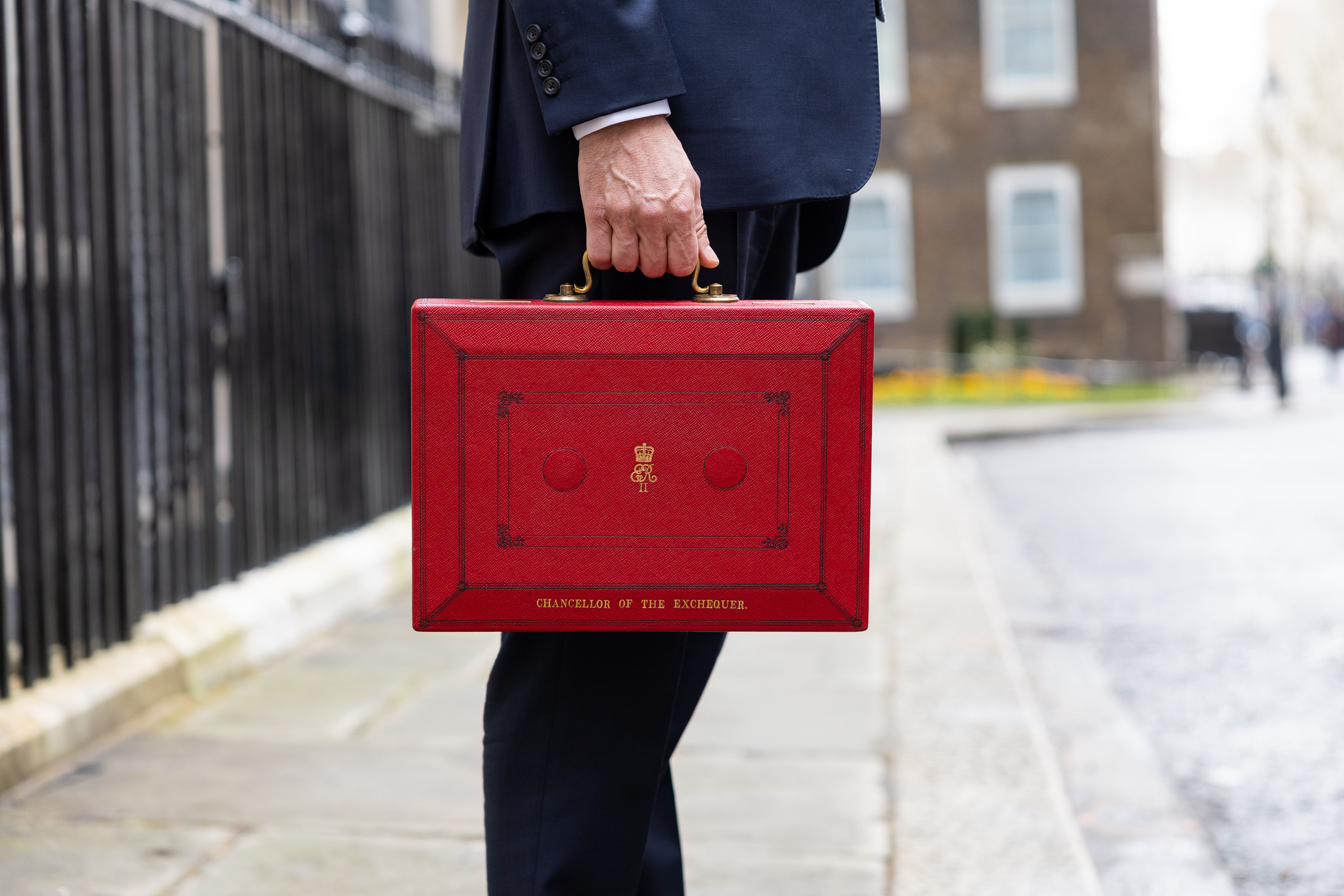
Photo credits: The Chancellor with the Budget box. The Chancellor Jeremy Hunt walks outside Downing Street with the Budget box. Photo by Zara Farrar / HM Treasury on Flickr (UK Autumn Budget 2026)