
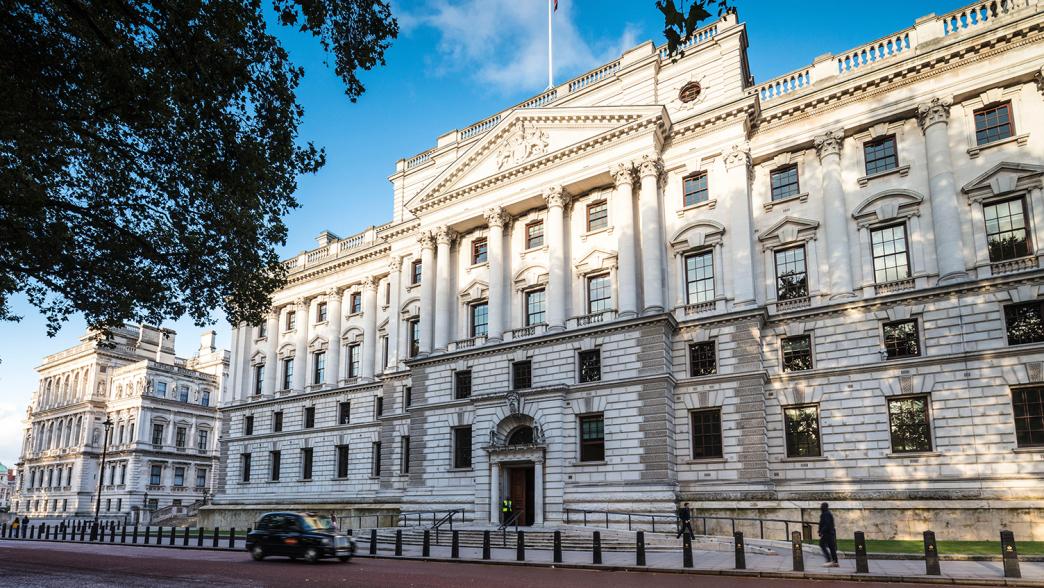
As MPs gather in the House of Commons today, Monday 23 November 2026, for the Second Reading of the UK Finance Bill 2026-27, Britain faces a defining structural test. The debate unfolds against a telling parliamentary backdrop: alongside opposition reasoned amendments over business taxes and frozen thresholds, four independent MPs have tabled an amendment demanding a 2% annual wealth tax on assets above £10 million.
Meanwhile, the government’s own flagship entrepreneurial measure—a narrowly drawn Founders’ Relief—offers little reassurance to the internationally mobile wealth creators, family offices, and serial entrepreneurs deciding where to anchor their next decade of enterprise. Building directly on Foreign Investors for Britain’s recent analysis of the Migration Advisory Committee’s (MAC) talent review (Growth Needs Capital, Not Just Credentials) and FIFB’s new parliamentary briefing (Britain needs a competitive investment framework), today’s Commons debate must move beyond static fiscal extraction and confront why Britain is failing to attract and retain global risk capital.
From Parliamentary Warnings to Today’s Investment Deficit
More than fifteen months ago, in August 2025, the House of Commons Business and Trade Committee launched its landmark inquiry into financing the real economy. Noting that the United Kingdom had recorded the lowest share of investment in GDP among G7 nations in 24 of the preceding 30 years—and ranked in the bottom ten of OECD economies for overall investment intensity—Committee Chair Rt Hon Liam Byrne MP warned that Britain possesses world-class science, entrepreneurs, and capital, yet lacks “a world-class system to connect them.” His conclusion was unambiguous: Britain requires not “tweaks at the margins—but a new architecture of investment for a new age of risk.”
Yet as Parliament examines the UK Finance Bill 2026-27 today, that architectural deficit remains unresolved. Following the abolition of the legacy non-domiciled regime in April 2025, the introduction of a narrow four-year Foreign Income and Gains (FIG) window, and the extension of 40% Inheritance Tax (IHT) to global assets after ten years of UK residence (with a post-departure tail of up to ten years), internationally mobile investors face acute fiscal uncertainty. Compounded by last week’s MAC recommendation to reject a dedicated investor visa and scrap the Innovator Founder route, Britain’s policy posture leaves three foundational questions unanswered:
- Why should an internationally mobile entrepreneur choose Britain before establishing a business?
- Why should an experienced investor establish their family and investment activity here rather than elsewhere?
- What predictable treatment can they expect for overseas assets accumulated before arrival?
Until HM Treasury and the Home Office provide durable, statutory answers to these questions, isolated tax reliefs will fail to stem the outflow of productive capital.
Why Founders’ Relief and Static “Tax the Rich” Narratives Miss the Real Economy
In the UK Finance Bill 2026-27—with technical consultation closing on 30 November ahead of legislative amendment—ministers have positioned Founders’ Relief as their primary signal to entrepreneurs. The measure offers a 10% Capital Gains Tax (CGT) rate on up to £10 million of lifetime gains from April 2027, even as the Bill halves the Business Asset Disposal Relief (BADR) lifetime limit from £1 million to £500,000. However, to qualify for Founders’ Relief, an individual must have held at least 25% of ordinary share capital from the commencement of trading, retained those shares for five years, remained continuously UK tax resident for five tax years prior to disposal, and scaled the enterprise to at least £10 million in turnover and 15 full-time employees alongside strict annual R&D or growth hurdles.
As FIFB’s parliamentary briefing demonstrates, a conditional exit relief five years in the future does not persuade an international founder or family office to relocate their household, balance sheet, and investment team to London today. Furthermore, as FIFB highlighted in Growth Needs Capital, Not Just Credentials, welcoming founders on paper while blocking the international angel investors, exited operators, and venture backers who fund them starves British scale-ups of the very capital required to reach that £10 million threshold.
“Growth and investment need more than a positive vibe. They need reliable, internationally competitive rules that stand up to scrutiny in a boardroom, not just sound good in a pub. Britain has benefited from internationally connected entrepreneurs and investors such as Magda Wierzycka and the Reuben family. We should not assume that people with comparable investment records would necessarily qualify under today’s talent or founder routes. An economy needs more than founders. It needs people who provide capital, mentor entrepreneurs and open doors to customers and international markets.” — Leslie MacLeod-Miller, Chief Executive, Foreign Investors for Britain, commenting on the UK Finance Bill 2026-27
At the same time, calls inside and outside Parliament for an annual 2% net wealth tax—exemplified by today’s independent reasoned amendment—rely on a static scoring illusion that ignores capital mobility and real-world economics. Ultra-high-net-worth wealth is rarely cash sitting idle in a vault; it is overwhelmingly committed to illiquid private company equity, scale-ups, infrastructure, and investment funds. Levying an annual charge on unrealised private valuations forces founders and family offices to liquidate shares, curtail R&D, or sell British businesses to foreign buyers simply to settle an annual tax bill. History confirms the outcome: nine of the twelve OECD countries that operated recurrent net wealth taxes—including Sweden, France, Germany, and Austria—ultimately repealed them after administrative complexity and capital flight eroded net Exchequer receipts.
The Evidence Base: Behavioural Mobility and International Benchmarks
Independent economic modelling commissioned by FIFB from Oxford Economics underscores why tax design must account for behavioural elasticity. Surveyed non-domiciled investors had deployed an average of £118 million per head into the UK economy, while non-domiciled residents contributed £8.9 billion in direct annual taxes prior to recent reforms. Crucially, over 80% of surveyed investors identified worldwide Inheritance Tax exposure on pre-arrival foreign assets as a primary driver of relocation, with unmitigated departures threatening up to £1 billion annually in lost direct and indirect revenues—including Stamp Duty Land Tax (SDLT), Value Added Tax (VAT), and corporate tax receipts.
While Britain debates piecemeal reliefs and punitive surcharges, competing hubs offer multi-year statutory clarity: Italy operates a €300,000 flat-tax regime with foreign-asset IHT protection for up to 15 years; Greece provides its Article 5A framework at €100,000 alongside a €500,000 investment threshold; and the UAE levies zero federal personal income or estate taxes.
To restore Britain’s competitive edge through a transparent, high-integrity partnership, FIFB urges MPs at today’s Second Reading of the UK Finance Bill 2026-27, to press ministers for a coordinated competitive investment framework built on four pillars:
Unlike passive legacy schemes, FIFB’s Global Investor Visa and tax election operates as a strict contractual bargain: participants pay full UK taxes on all domestic income, gains, and UK property, commit at least £2.5 million into active British enterprises, life sciences, clean energy, or British Business Bank-linked funds, and pay £200,000 every year directly to HMRC—generating a projected £225 billion or more in inward investment and wider economic benefits over ten years.
A Constructive Mandate for HM Treasury and the Home Office: UK Finance Bill 2026-27
Britain cannot tax its way to prosperity by shrinking its capital base. As MPs debate the UK Finance Bill 2026-27 today, Parliament has a decisive opportunity to bridge the divide between domestic revenue needs and international competitiveness.
Foreign Investors for Britain calls on parliamentarians across all parties to press ministers for an immediate joint Treasury–Home Office consultation, with HMRC participation, backed by independent fiscal appraisal and a published timetable for decisions. By ruling out wealth and exit taxes, consulting on a permanent personal inheritance-tax allowance for pre-arrival foreign assets, and establishing a contribution-based Global Investor Visa, Britain can finally build the durable architecture of investment required to finance our real economy.
UK Global Investor Visa (GIV)
The GIV (UK Global Investor Visa) is explicitly designed to serve a dual purpose: attracting new mobile capital (including US citizens seeking predictable cross-border tax structures) and retaining or inviting back established UK-resident non-domiciled individuals who departed or paused investment due to punitive legacy reforms.
Read our full paper, and join our efforts in persuading Government to think again about their damaging reforms.

Image: UK Finance Bill 2026-27, The UK Treasury CC BY 4.0, by IFG Institute for Government